




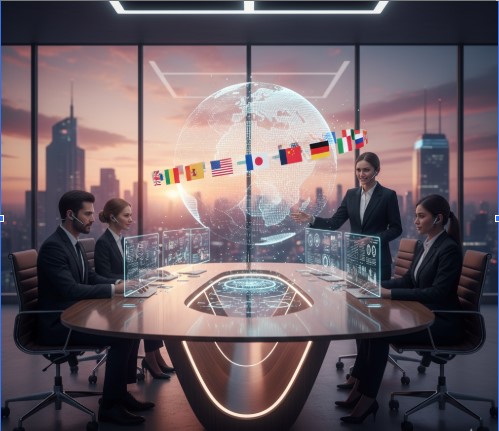
In an increasingly globalized world, effective communication across languages is crucial for success. Companies, legal institutions, healthcare organizations, and educational institutions often interact with Spanish-speaking clients, partners, and stakeholders. Even with digital communication tools, language barriers can lead to misunderstandings, lost opportunities, and operational inefficiencies.
A professional English to Spanish interpreter ensures that these challenges are effectively managed. By translating spoken words in real-time while preserving nuance, tone, and context, interpreters allow conversations to flow naturally. They are essential for accurate communication, cultural understanding, and operational efficiency in cross-border interactions.
Understanding the Complexity of Language Interpretation
Although English and Spanish are among the most widely spoken languages globally, effective interpretation requires more than basic language knowledge. Regional variations, idiomatic expressions, technical jargon, and cultural differences can dramatically affect comprehension.
A skilled interpreter combines linguistic proficiency with deep cultural understanding, ensuring that messages are conveyed accurately and appropriately. Their expertise goes beyond language—they act as facilitators of meaning, preserving the intent and subtleties of every conversation.
Core Responsibilities of Interpreters
Professional interpreters perform a variety of tasks that extend beyond simple translation:
- Real-Time Interpretation: Converting spoken words instantly during meetings, negotiations, and presentations.
- Cultural Mediation: Advising participants on etiquette, tone, and culturally sensitive expressions.
- Industry-Specific Knowledge: Interpreting technical, legal, corporate, or medical terminology accurately.
- Confidentiality: Protecting sensitive information and maintaining professional discretion.
By bridging the gap between languages and cultures, interpreters enable clear communication and strengthen relationships between international partners.
Cultural Competence: A Key Component
Effective interpretation requires understanding the cultural context behind the words. Communication is shaped by social norms, professional etiquette, and regional differences.
Examples include:
- Business communications vary in formality and tone across Latin America and Spain.
- Idioms, humor, and figurative language need careful adaptation to maintain meaning.
- Emotional tone and emphasis must be conveyed accurately to prevent misinterpretation.
Through cultural intelligence, interpreters ensure that interactions are clear, respectful, and meaningful.
Applications Across Sectors
English-Spanish interpretation is critical in numerous professional contexts:
- Business: Facilitating international meetings, negotiations, and presentations.
- Healthcare: Ensuring accurate communication between medical professionals and Spanish-speaking patients.
- Legal Services: Supporting court proceedings, depositions, and contract negotiations where precision is crucial.
- Education and Conferences: Enabling effective knowledge exchange across international audiences.
In all these scenarios, interpreters help maintain clarity, accuracy, and trust, which are essential for successful outcomes.
Techniques: Simultaneous and Consecutive Interpretation
Interpreters employ different techniques depending on the scenario:
- Simultaneous Interpretation: Translating speech in real-time, often used in conferences, webinars, and large meetings.
- Consecutive Interpretation: Translating after the speaker pauses, suitable for business meetings, medical consultations, and legal discussions.
Both techniques demand exceptional focus, linguistic skill, and the ability to maintain the integrity of the original message while adapting to context and audience.
Challenges in Professional Interpretation
Interpreters face multiple challenges, including:
- Dialect Variations: Spanish differs significantly across regions; interpreters adjust phrasing to ensure comprehension.
- Specialized Terminology: Fields like finance, law, and medicine require precise vocabulary.
- Maintaining Emotional Nuance: Tone and emphasis must be accurately conveyed.
- Confidentiality: Handling sensitive or proprietary information requires strict professionalism.
These challenges necessitate a combination of technical expertise, cultural knowledge, and linguistic skill.
Strategic Benefits for Organizations
Investing in professional interpretation provides significant advantages:
- Clear Communication: Reduces misunderstandings and ensures accurate exchange of information.
- Stronger Relationships: Cultural competence fosters trust and collaboration with Spanish-speaking partners.
- Operational Efficiency: Real-time interpretation accelerates decision-making and project execution.
- Risk Reduction: Accurate translation helps avoid legal, financial, or reputational issues.
By facilitating precise communication, interpreters help organizations achieve their strategic goals with confidence.
Integrating Interpreters Into Professional Workflows
To maximize effectiveness, interpreters should be integrated into organizational processes:
- Pre-Meeting Preparation: Reviewing agendas, terminology, and objectives for clarity.
- Active Participation: Offering clarifications and cultural guidance during discussions.
- Post-Meeting Documentation: Ensuring that summaries, agreements, and action items are accurately communicated across languages.
Integration ensures consistency, precision, and alignment in all cross-border communications.
Selecting the Right Interpreter
Finding the right professional is critical. Important considerations include:
|
Factor |
Importance |
|
Language Proficiency |
Mastery of both English and Spanish |
|
Cultural Awareness |
Understanding regional nuances and communication etiquette |
|
Industry Expertise |
Familiarity with legal, corporate, healthcare, or technical terminology |
|
Experience |
Proven success in real-time interpretation |
|
Professionalism |
Commitment to confidentiality, neutrality, and reliability |
Choosing a skilled interpreter ensures effective communication, professional representation, and successful outcomes.
Case Study: Corporate Negotiation Success
A multinational corporation engaged in negotiations with a Latin American partner involving financial projections, legal agreements, and marketing strategies. The English to Spanish interpreter:
- Provided accurate real-time interpretation, preserving tone and intent
- Offered guidance on culturally appropriate language to prevent misunderstandings
- Assisted in reviewing agreements for clarity across languages
The negotiation concluded successfully, demonstrating the tangible value of professional interpretation in high-stakes business scenarios.
Modern Tools and Technology for Interpreters
Technology enhances interpreter effectiveness:
- Video Conferencing Solutions: Real-time interpretation for remote meetings.
- Terminology Management Tools: Ensuring consistency of technical terms across multiple sessions.
- Integration With Translation Platforms: Coordinating live interpretation with written translations.
Combining human expertise with technology ensures accuracy, efficiency, and seamless communication across borders.
Conclusion: Enabling Effective International Communication
In a world where global collaboration is essential, professional interpreters are critical to success. Skilled English-Spanish interpretation ensures that communication is accurate, culturally appropriate, and contextually precise. By preserving nuance, tone, and intent, interpreters foster trust, strengthen relationships, and allow organizations to operate confidently in Spanish-speaking markets.
Investing in professional interpretation is a strategic decision that goes beyond language—it enhances operational efficiency, builds stronger relationships, and ensures international success.
About the Author:
Orion Translations is a trusted language partner for organizations operating across international markets. Specializing in professional English to Spanish interpreter services, Orion combines cultural expertise, technical precision, and real-time communication skills to ensure conversations remain accurate, natural, and contextually aligned across languages. From business meetings to legal and healthcare environments, Orion helps clients communicate confidently with global audiences. Visit www.oriontranslations.com to learn more.